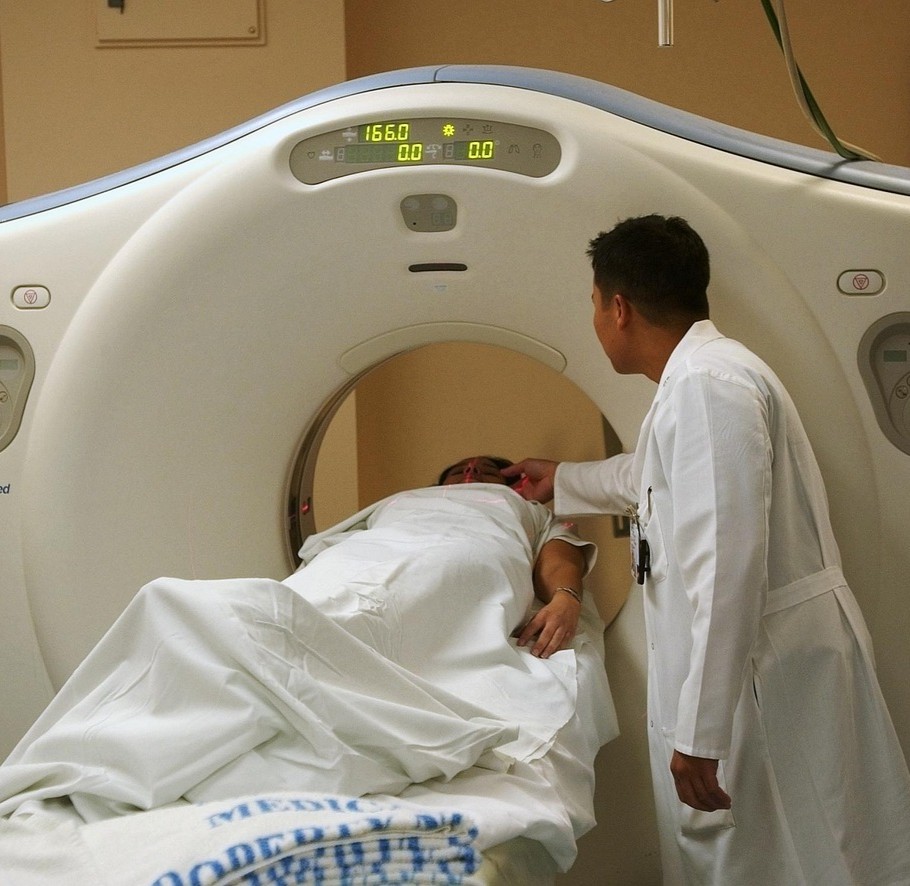
SGRT uses infrared camera systems and surface mapping software to monitor the patient’s skin surface in real time. Instead of relying solely on permanent marks or tattoos, SGRT continuously tracks your position and automatically pauses radiation if you move out of alignment — offering unmatched precision and safety.
This process is necessary so that we can correct the patient’s position in real-time (1). Use of SGRT enables continuous monitoring of the patient’s position, thus improving patient safety and comfort, while also standardising workflows by providing increased precision/repeatability.
Surface-guided Radiation Therapy (SGRT) is a rapidly growing technique that uses stereo vision technology to track patients’ surfaces in 3D for setup and motion management during radiotherapy. It can be used for many types of radiation therapy.
Before you receive total body irradiation, you’ll have an appointment — called a simulation — to plan your treatment. This is like a trial run of the treatment you’ll receive. It helps your healthcare providers ensure that you’re positioned so you can get the right dose of radiation.
Dr. Shweta Mutha Pande is a radiation oncology expert with extensive training in advanced radiotherapy techniques, including SGRT, IGRT, VMAT, and CyberKnife Radiosurgery. With cutting-edge tools and a compassionate approach, she ensures patients receive precision care with minimal side effects.